


🥇 1st Place @ UBC Product Heist.
The Operating System for Venture Capital
Sudo.
Team
Donna Li
Darius Alexander
Pauline Ongchan
Philippe Grosjean
My Roles
User Research
Wireframing
Prototyping
2 day hackathon.
Duration
Sudo is a tool designed to help VC associates keep track of the many things involved in evaluating startups. In many firms, information about startups is scattered across spreadsheets, emails, notes, and different tools. This makes it hard to see the full picture when deciding which companies to invest in.
Overview.
The challenge was set by Overdrive, an intelligence studio that builds AI tools for venture capital firms. Our task was to design a system that helps VC teams stop drowning in information and start making faster, more confident decisions.
Background.
How might we give VC associates a single source of truth that connects their scattered data, relationships, and signals to make faster, more confident investment decisions?
Problem Statement
VC analysts spend over 50% of their day on repetitive, manual work. There is no single place where everything connects.
Problem.
Too much mundane work.
Emails, pitch decks, meeting notes, and market reports all live in different tools. Nothing is automated.
Complex relationships.
Who knows who, who’s backed which founder. It all lives in people’s heads and scattered CRM notes.
Hard to
rank startups.
Hard to prioritize. Startup signals exist but are scattered across spreadsheets, rarely evaluated consistently.
Solution
Sudo brings four features into one unified workplace:
email intelligence, AI insights, a judging rubric, and relationship mapping.
John logs in and sees everything happening across his pipeline today:
scheduled calls, priority deals, deadlines. Without opening a single email.
01 Pipeline Dashboard.

Sudo has already populated the deal stage, signal score, funding round, and key metrics automatically.
02 Company Profile.
He checks the People Tracker to see how his network connects to a founder. The relationship graph makes it easy to spot who on his team already knows them.
03 People Tracker.

The judging rubric scores startups consistently, so the whole team is aligned on what to prioritize next.
04 Judging Rubric.

Design Process.
We mapped the workflow of a venture capitalist using FigJam.
We followed the process of “John Grey” as he evaluates startups.
01 Empathize

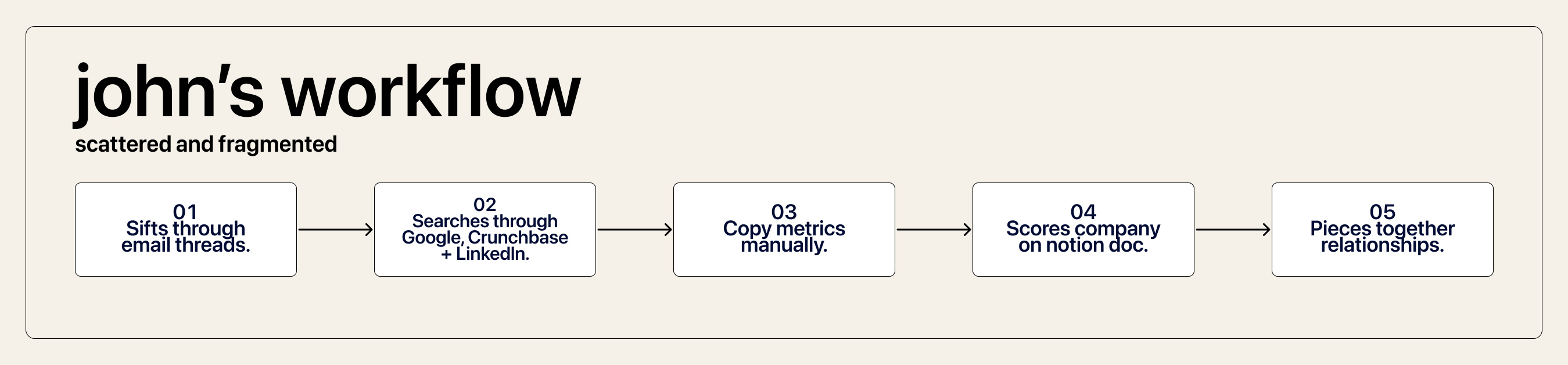
From the journey map, we identified the main problem.
Investors spend too much time organizing data before evaluating a startup.
Our goal was to design a system that helps investors understand opportunities faster.
02 Define

We explored different ideas for solving this problem.
These included dashboards, signal scoring, and structured evaluation tools.
This led to the concept of SUDO VC OS.
03 Ideate


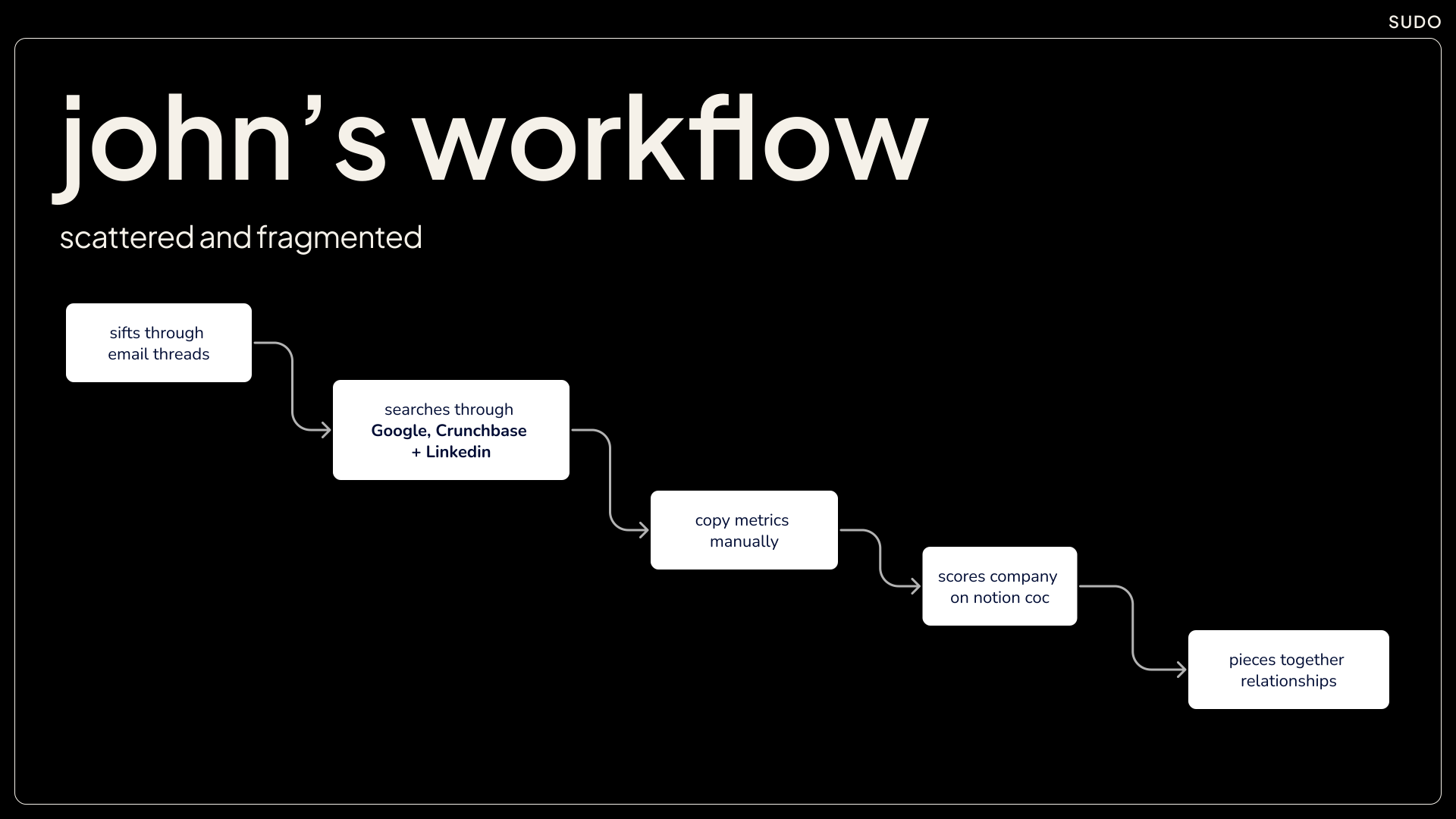
We created interface prototypes that organize startup signals.
Signals include team, product, and market.
The goal was a clear and simple evaluation workflow.
04 Prototype
We presented the prototype to judges and walked them through the workflow.
The feedback showed that the system made startup analysis clearer and faster.
05 Test
This helped us see where time is spent.
Most of the process involves manually gathering and organizing information from many sources.
Reflection.
Do not assume people will connect the dot themselves. The best presentations are where every point lands and flows on to the next. My team made sure the judges understood the problem deeply before we showed them the prototype.
Spoon feed the audience.
The order of what you present things matters more than expected. We did not just present a product, we walked the judges through a person’s day, made them feel frustration, then showed them the fix.
Structure is storytelling.
It is tempting to show everything you built and explain every decision you made along the way. But the best presentations leave people with clarity, not information overload. Knowing what to cut was just as important as knowing what to include.
Guide. Don’t dump.